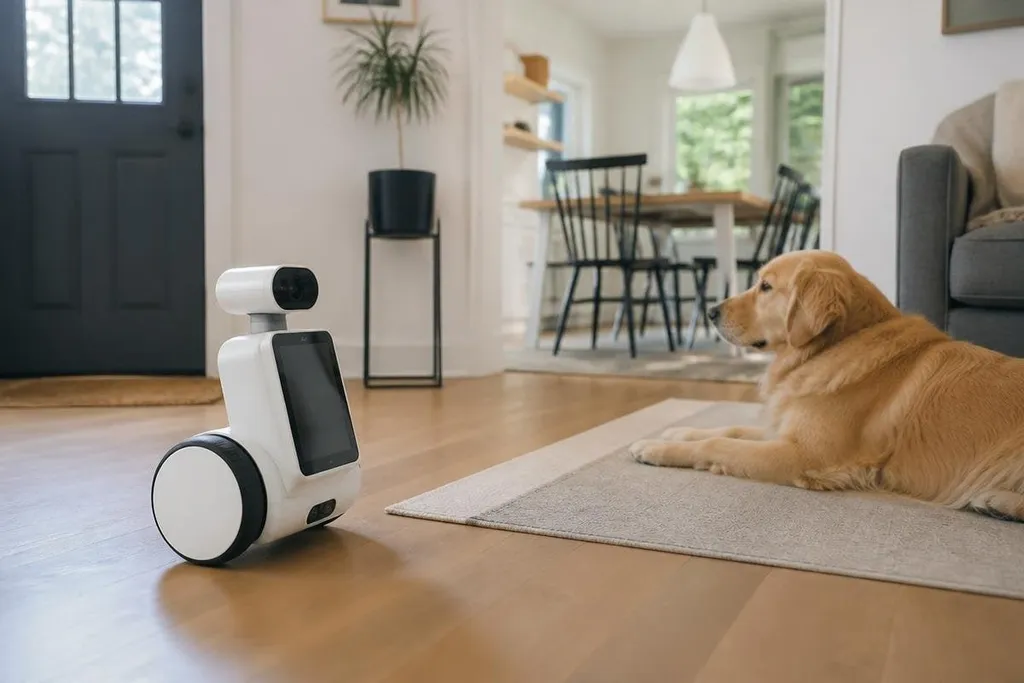
A home robot with a camera can move through rooms, send video, and report changes while you're away. That makes it useful for checking a door, a pet, or a strange sound, but it doesn't turn the robot into a full security service.
Quick read:
- A camera robot can inspect rooms from a distance when its network connection works.
- Sensors can spot motion, sound, smoke, or an open door, but each sensor has limits.
- Privacy, charging, stairs, and weak Wi-Fi can matter more than the robot's movement.
What the robot can actually do
The basic setup combines a camera, wheels or legs, a battery, and a phone app. You send the robot to a room, view the camera feed, and steer it from the app if the robot supports teleoperation, which means remote control by a person.
Some systems can move on their own using cameras, LiDAR, or floor sensors. They may build a map of the home, avoid furniture, and return to a charging dock. Those functions help the robot reach a room, but they don't tell it what a broken window or water leak means.
That difference matters during travel. A robot can show you a wet patch on the floor. You still need to decide if it came from a pet bowl, a pipe, or a roof leak, then arrange the fix.
What it can notice
A camera gives you visual evidence, while other sensors can add a narrow signal. A microphone may pick up a loud crash. A door sensor can report an open entry. A smoke detector can send an alert when its alarm is triggered.
These signals need careful handling. A robot may hear a dropped object and report it as unusual noise. A moving curtain can trigger a motion alert. A camera can miss a dark corner, a room behind a closed door, or an event outside its view.
A home robot’s privacy claims need a record of its sensors, recording rules, and test setting. Robot24.com home robotics coverage can put those details beside the machine’s claimed job, so you can judge what stays inside the house before checking the network link.
The network is another weak point. Remote video and control need the robot and your phone to reach the same service. If the home internet fails, the robot may still move locally, but you may lose the live feed and alerts.
The limits inside a real home
Stairs are a basic physical problem. A wheeled robot may stop at the edge, while a legged robot may face a different risk on narrow steps, loose rugs, or clutter. A robot that works well on a clear floor may struggle after a chair is moved.
Battery life also shapes the job. Patrols, video streaming, and repeated trips use power. The charging dock needs a clear route, and the robot needs to find it before the battery runs low. A blocked dock can turn a working patrol into a silent object on the floor.
Privacy needs a place in the plan. A camera inside the home can record family members, visitors, or service workers. Check where video is stored, who can view it, how accounts are protected, and what happens when the robot is shared with another person.
I'd use a robot as a remote inspection tool, not as the only protection for an empty house.
A setup worth testing before travel
Give the robot a small, clear route first. Watch it cross the rooms you expect it to patrol, return to its dock, and send an alert after you leave the area. Test the setup from a different network, such as a mobile connection, because a phone on the same home Wi-Fi can hide connection problems.
Use this checklist before leaving:
- Map the route: remove cables, loose rugs, and objects that can block the robot.
- Check the dock: confirm that the robot can reach it and connect to charge.
- Test alerts: trigger the door, motion, or sound event you expect to receive.
- Review account access: remove old users and turn on the strongest sign-in option available.
- Plan the response: decide who will check the home if an alert arrives.
The last point is the one people skip. An alert has value only when someone can inspect the problem, contact a neighbor, or call emergency services when needed.
A robot can give you eyes and a few useful signals while you travel, but the house still needs a person who can act when the signal is unclear.